
This comprehensive slide deck is designed specifically for senior leaders, strategists, and cross-industry professionals who aim to drive transformative growth and operational excellence within their organizations. Through a strategic exploration of Lean principles and tools, it equips leaders with the mindset and methodologies to foster innovation, eliminate inefficiencies, and create lasting value.

This slide deck blends strategy with practical application, providing actionable insights for decision-makers to:
• Achieve alignment between vision and execution.
• Navigate challenges in deploying Lean tools and frameworks.
• Build resilient systems that thrive on innovation and adaptability.
Take the next step in your leadership journey—Think Lean, Create Lasting Value.
||||||||||||||||||||||||||||||||||||||||||||||||||||||||||||||||||||||||||||||||||||||||||||||||||||||||||||||||||||||||||||||||||||||||||||||||||||||
This training package includes:
1. Lean Thinking PPT training presentation (PowerPoint format)
2. Eight Wastes of Lean poster (PDF format, in color and monochrome, printable in A3 size)
||||||||||||||||||||||||||||||||||||||||||||||||||||||||||||||||||||||||||||||||||||||||||||||||||||||||||||||||||||||||||||||||||||||||||||||||||||||
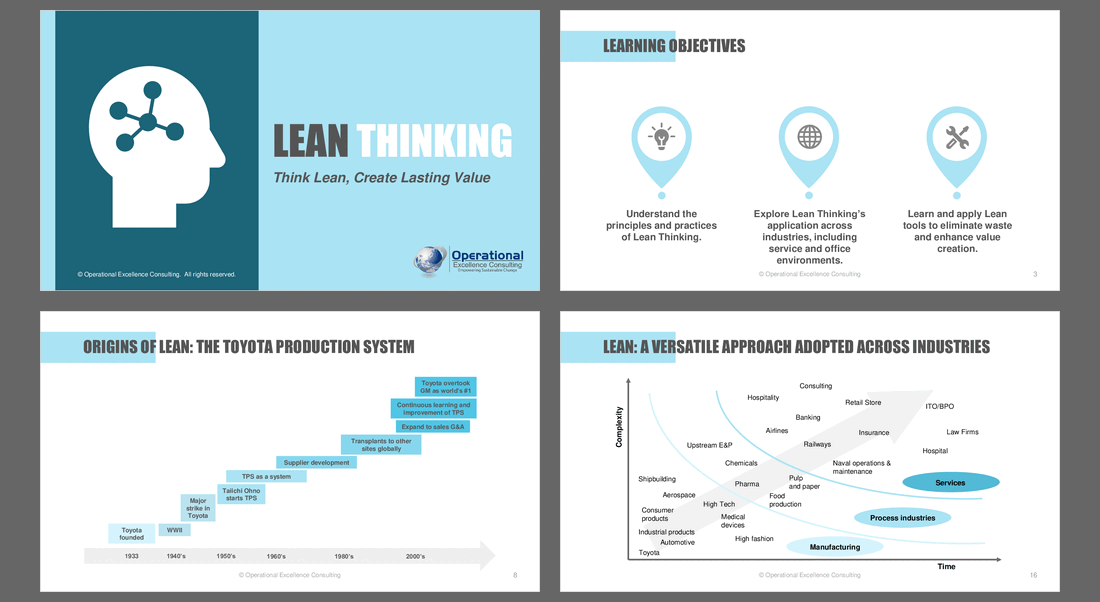
LEARNING OBJECTIVES
1. Understand the principles of Lean Thinking and how they align with organizational goals to deliver maximum value.
2. Discover essential Lean tools for streamlining workflows, improving efficiency, and empowering teams.
3. Define key leadership roles in Lean deployment to ensure sustained impact across the organization.
4. Learn how to build and sustain a Lean culture for continuous improvement and long-term success.
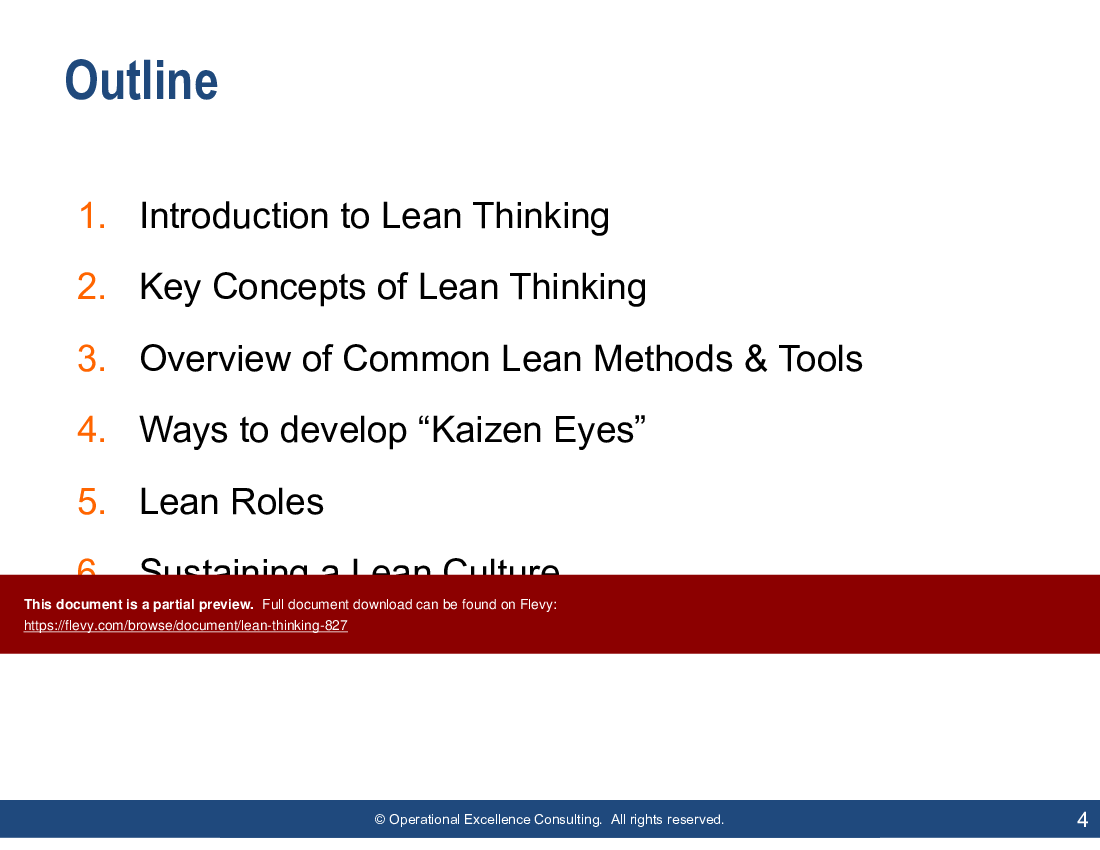
CONTENTS
1. Foundations of Lean Thinking
• Explore the origins and principles of Lean Thinking, including its global impact and relevance across industries. Learn how Lean Thinking creates a customer-centric, waste-free, and value-driven culture.
2. Essential Lean Thinking Tools
• Gain practical insights into powerful tools like Hoshin Kanri, Value Stream Mapping, and Gemba Walks. Real-world examples and case studies illustrate how these tools drive operational excellence and strategic alignment.
3. Key Roles in Lean Deployment
• Understand the critical roles of executives, Lean champions, team leaders, and employees in successfully implementing Lean. Clear responsibilities and collaborative efforts are essential to achieving systemic transformation.
4. Sustaining a Lean Culture
• Discover actionable strategies for embedding Lean Thinking into the organizational fabric. Learn how to cultivate continuous improvement, engage teams, and ensure long-term adaptability in a dynamic business environment.
Got a question about the product? Email us at support@flevy.com or ask the author directly by using the "Ask the Author a Question" form. If you cannot view the preview above this document description, go here to view the large preview instead.
Executive Summary
The Lean Thinking presentation is a robust training resource designed to empower organizations in their pursuit of operational excellence. Developed by a Certified Lean Six Sigma Black Belt with extensive experience at industry leaders like Microsoft, IBM, and Panasonic, this presentation equips corporate executives and consultants with essential Lean principles and tools. Users will learn to apply Lean methodologies such as Hoshin Kanri, Value Stream Mapping, and Gemba Walks to eliminate waste, enhance value creation, and foster a culture of continuous improvement.
Who This Is For and When to Use
• Corporate executives seeking to implement Lean methodologies in their organizations
• Integration leaders responsible for driving operational efficiency
• Consultants focused on process improvement and waste reduction
• Training and development teams aiming to enhance employee skills in Lean practices
Best-fit moments to use this deck:
• During organizational transformation initiatives aimed at improving efficiency
• In training sessions for teams adopting Lean principles
• When developing strategic plans that require alignment with Lean methodologies
Learning Objectives
• Define the core principles and practices of Lean Thinking
• Build and apply Lean tools to eliminate waste and enhance value creation
• Explore the application of Lean Thinking across various industries, including service and office environments
• Foster a culture of continuous improvement and innovation within teams
Table of Contents
• Foundations of Lean Thinking (page 5)
• Essential Lean Thinking Tools (page 34)
• Key Roles in Lean Deployment (page 169)
• Sustaining a Lean Culture (page 178)
Primary Topics Covered
• Foundations of Lean Thinking - This section introduces the fundamental concepts and historical context of Lean Thinking, emphasizing its global impact and relevance across industries.
• Essential Lean Thinking Tools - A detailed overview of key Lean tools such as Hoshin Kanri, Muda, Takt Time Analysis, Heijunka, Gemba Walk, and Visual Management, each designed to drive efficiency and eliminate waste.
• Key Roles in Lean Deployment - Identification of critical roles and responsibilities necessary for successful Lean implementation, including Lean Steering Committee, Deployment Leaders, and Team Members.
• Sustaining a Lean Culture - Strategies for maintaining and nurturing a Lean culture within organizations, ensuring long-term success and continuous improvement.
Deliverables, Templates, and Tools
• Lean Thinking training slides for team workshops
• Value Stream Mapping templates for process optimization
• Hoshin Kanri planning frameworks for strategic alignment
• Gemba Walk observation checklists for frontline engagement
• Standard Work documentation templates for consistency in processes
• Kaizen event planning guides for continuous improvement initiatives
Slide Highlights
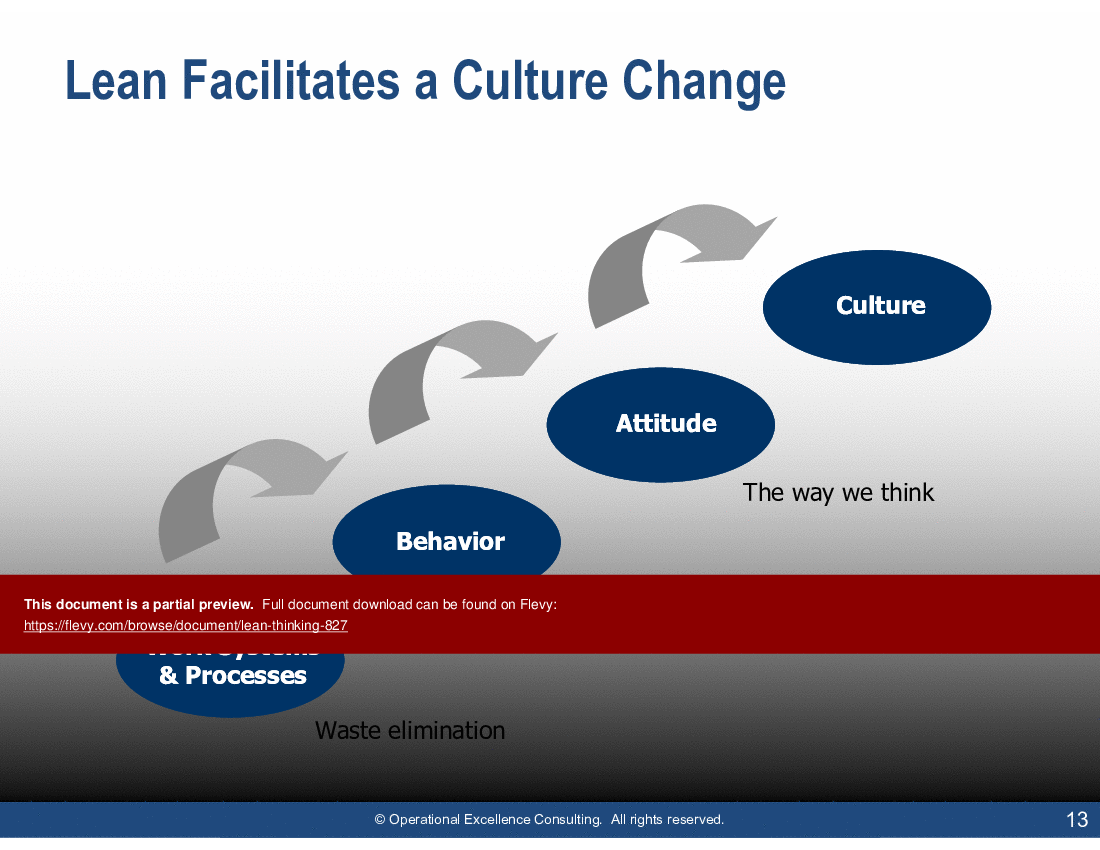
• Overview of Lean Thinking’s global perspective and its adoption across industries
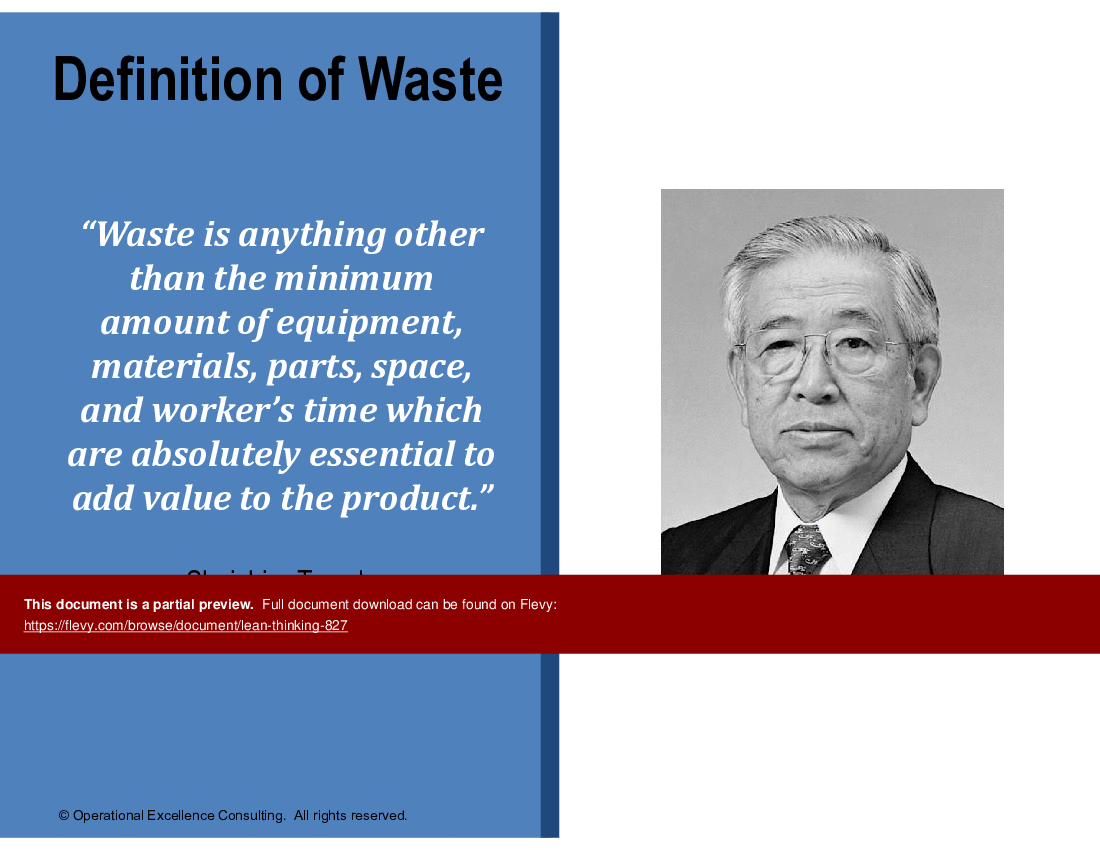
• Detailed explanation of the eight types of waste in Lean Thinking
• Visual representation of the Hoshin Kanri process and its phases
• Case studies showcasing real-world applications of Lean principles in companies like Toyota and Amazon
• Insights into sustaining a Lean culture and overcoming implementation challenges
Potential Workshop Agenda
Lean Thinking Overview Session (90 minutes)
• Introduction to Lean Thinking principles and history
• Discussion on the importance of waste elimination
Essential Lean Tools Workshop (120 minutes)
• Hands-on activities using Value Stream Mapping and Takt Time Analysis
• Group exercises to identify waste in current processes
Sustaining Lean Culture Session (60 minutes)
• Strategies for embedding Lean practices in organizational culture
• Discussion on roles and responsibilities in Lean deployment
Customization Guidance
• Tailor the presentation to reflect specific organizational goals and challenges
• Adjust case studies to align with industry-specific examples relevant to the audience
• Incorporate company-specific metrics and terminology in discussions and templates
Secondary Topics Covered
• The role of leadership in Lean transformation
• Techniques for engaging employees in Lean initiatives
• Best practices for conducting effective Gemba Walks
• Methods for measuring Lean success and sustainability
FAQ
What is Lean Thinking?
Lean Thinking is a systematic approach focused on improving processes by eliminating waste, optimizing flow, and delivering maximum value to customers through continuous improvement.
How can Lean tools be applied across different industries?
Lean tools are versatile and can be adapted to various sectors, including manufacturing, healthcare, and service industries, to enhance efficiency and reduce waste.
What are the eight types of waste in Lean Thinking?
The eight types of waste include overproduction, inventory, waiting, defects, over-processing, motion, talent, and transportation.
How does Hoshin Kanri support Lean deployment?
Hoshin Kanri aligns organizational goals with daily activities, ensuring that all levels of the organization are working towards the same strategic objectives.
What is the significance of Gemba Walks?
Gemba Walks allow leaders to observe processes firsthand, engage with frontline employees, and identify opportunities for improvement directly in the work environment.
How do we sustain a Lean culture?
Sustaining a Lean culture requires ongoing training, leadership commitment, recognition of achievements, and continuous engagement of employees in improvement initiatives.
What is the role of a Lean Champion?
A Lean Champion is responsible for leading Lean initiatives, mentoring team leaders, and ensuring that Lean practices are effectively implemented and sustained.
How can we measure the success of Lean initiatives?
Success can be measured through key performance indicators (KPIs) such as reduced lead times, improved quality metrics, and increased employee engagement in improvement activities.
Glossary
• Lean Thinking - A management philosophy focused on waste elimination and value creation.
• Value Stream Mapping - A tool used to visualize and analyze the flow of materials and information.
• Hoshin Kanri - A strategic planning method that aligns goals and objectives across the organization.
• Gemba Walk - A practice where leaders observe work processes to identify improvement opportunities.
• Kaizen - A philosophy of continuous improvement involving all employees.
• Muda - The Japanese term for waste in Lean Thinking.
• Takt Time - The maximum allowable time to produce a product to meet customer demand.
• Heijunka - A method for leveling production to reduce variability.
• Standard Work - Documented procedures that define the most efficient way to perform tasks.
• Visual Management - The use of visual cues to enhance communication and workflow management.
• Continuous Improvement - Ongoing efforts to enhance products, services, or processes.
• Lean Champion - An individual responsible for leading Lean initiatives within an organization.
Source: Best Practices in Lean PowerPoint Slides: Lean Thinking PowerPoint (PPTX) Presentation Slide Deck, Operational Excellence Consulting
This document is available as part of the following discounted bundle(s):
Save %!
Lean & Kaizen Fundamentals for Service Improvement
This bundle contains 2 total documents. See all the documents to the right.
Save %!
Lean Essentials for Shopfloor Improvement Training Package
This bundle contains 6 total documents. See all the documents to the right.
|
Receive our FREE presentation on Operational Excellence
This 50-slide presentation provides a high-level introduction to the 4 Building Blocks of Operational Excellence. Achieving OpEx requires the implementation of a Business Execution System that integrates these 4 building blocks. |